
Taking Root
Local food systems connecting people to nature and each other.
Advised by:
IDEO, Foodwise
Collaborators:
Lydia Chau, Haley Majores, Uyen Phan
Timeline:
24 weeks
Role:
UX Researcher / UX Designer
Industry:
Social Impact, Restaurant/Dining/Agriculture
Background
San Francisco has one of the highest rates of restaurants per capita in the US — 3.7 per 1,000 residents as compared to the 2.2 US average. That equates to approximately 7 million restaurant meals per month in San Francisco alone.



The Problem

The Question
How might we connect independent Bay Area restaurants with local farms, and surface those connections to diners, so that local, seasonal sourcing becomes an expected part of the dining experience?
Farmers, Chefs, & the Foodwise Farmer's Market
We interviewed local chefs and farmers to understand the pain points in sourcing and selling at farmers markets. That led us to Foodwise, the non-profit behind San Francisco's Ferry Plaza Farmers Market and its network of 200+ local farms and food makers. We spoke with Lulu Meyer, their Director of Operations, to understand their role in this ecosystem.
Foodwise already runs a Market-to-Chef program that connects chefs with local farmers for weekly sourcing. But as a non-profit, they can't sustain support once that initial match is made. We saw an opportunity to build on their existing program, deepening support for these relationships and extending its impact. Lulu advised our team throughout the project.

Connects chefs to farmers for weekly sourcing
No ongoing relationship support
What We Heard
After chatting with local chefs, farmers, and Foodwise we drew insights from what we heard: local sourcing happens primarily through personal connections between chefs and farmers, who both work on tight profit margins and schedules; relationship building is valued but the sourcing process is very manual and slow; there is no central system for this very manual process, which is challenging especially when most restaurants need to source from multiple farms to source what they need.


Our Goal
Build on Foodwise’s Market-to-Chef program—designing ways to amplify its impact for farmers and chefs and to expand its reach to connect more meaningfully to diners.
Taking Root: Delivery Service + Certification Program
Building on Foodwise’s existing Market-to-Chef program, we created Taking Root—one part delivery system, one part local sourcing certification program to support the broader system that enables chefs to source locally and surfaces these relationships to diners to bring awareness and boost demand for more locally sourcing restaurants.






Final Designs:
We designed the back-end ordering system around clear checkpoints for farmers and chefs, surfacing what matters most to each. Beyond individual orders, the platform creates a digital network where chefs can see what others are sourcing, encouraging ongoing relationships with familiar farms and opening the door to new ones.
Farmer — Inventory Upload & Order Management
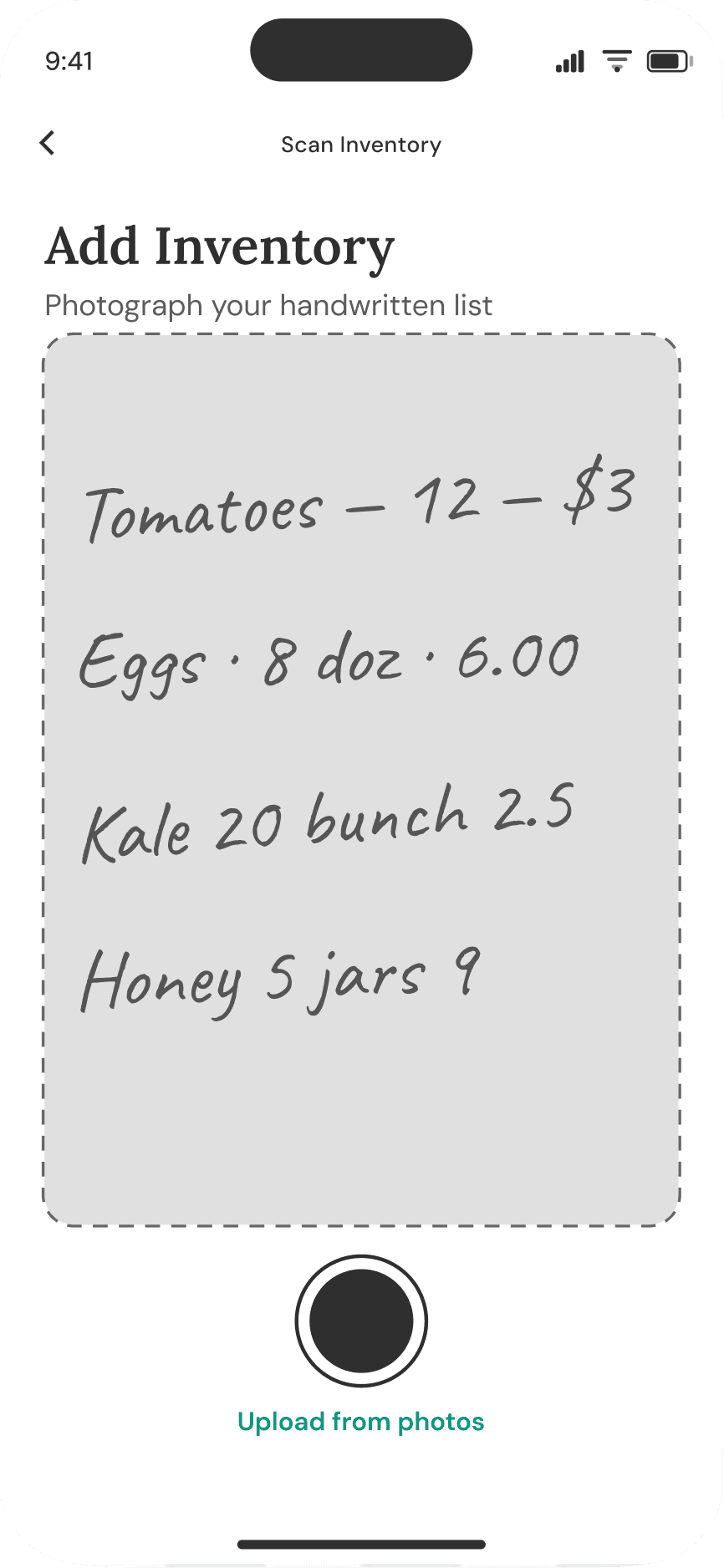

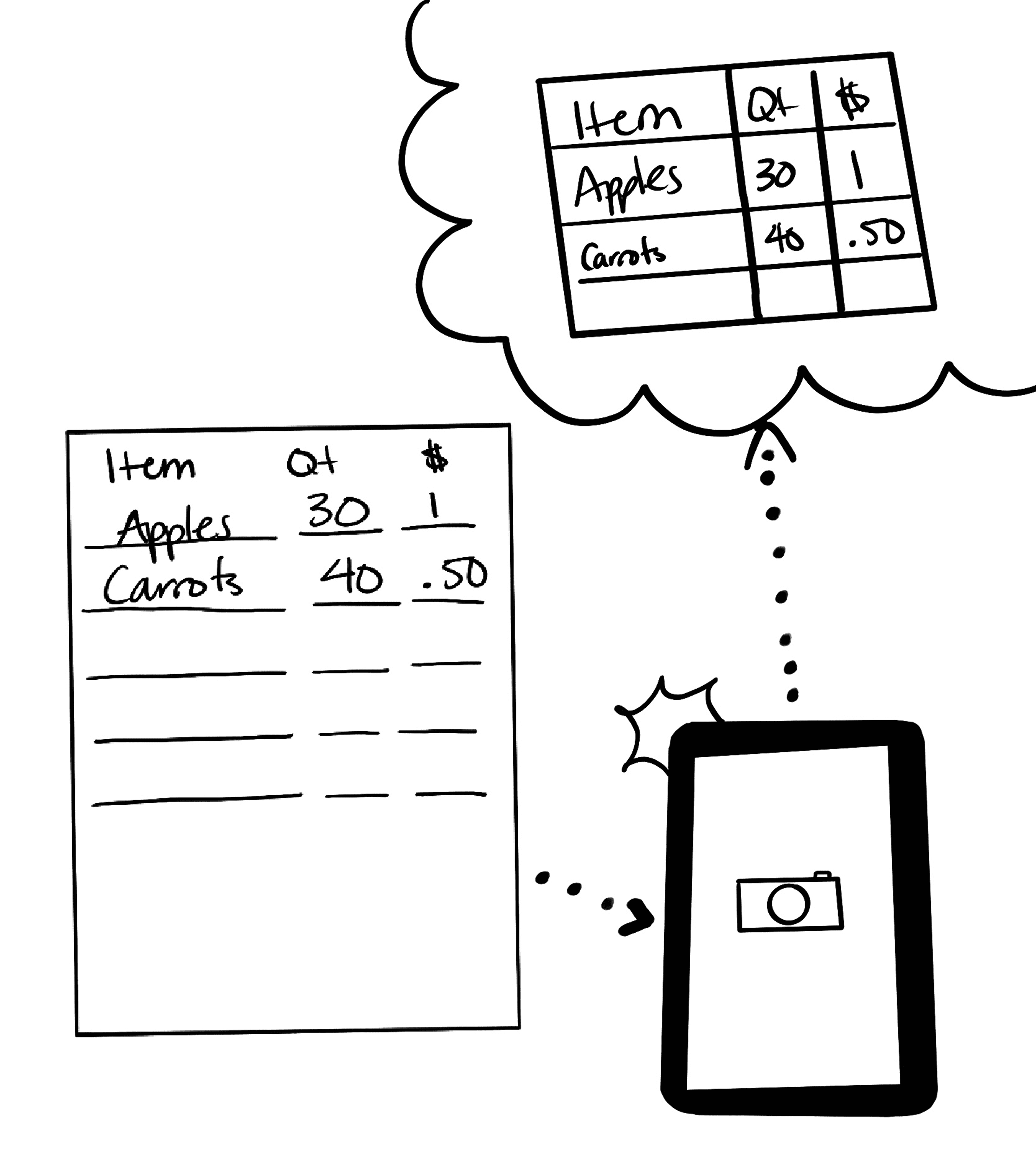
Inventory Upload
Before the market, Farmers upload their inventory list for the week so chefs can start shopping for the freshest items.
We chose a photo-upload flow over manual entry because our farmer interviews showed complexity, not lack of desire, was the biggest barrier to adoption
Farmer's Desktop Dashboard
Farmer's have a desktop dashboard that shows overview of orders + their status, inventory status overview, recent order/inventory related activity, and a quick way to message support for any technical issues.

Farmer's Inventory
Uploaded either by scanning a physical list or added manually as items are harvested, farmers can modify their inventory.
To provide flexibility for farmers, there is a draft mode and a listed mode that can be assigned to each item individually.

Farmer's Packing List
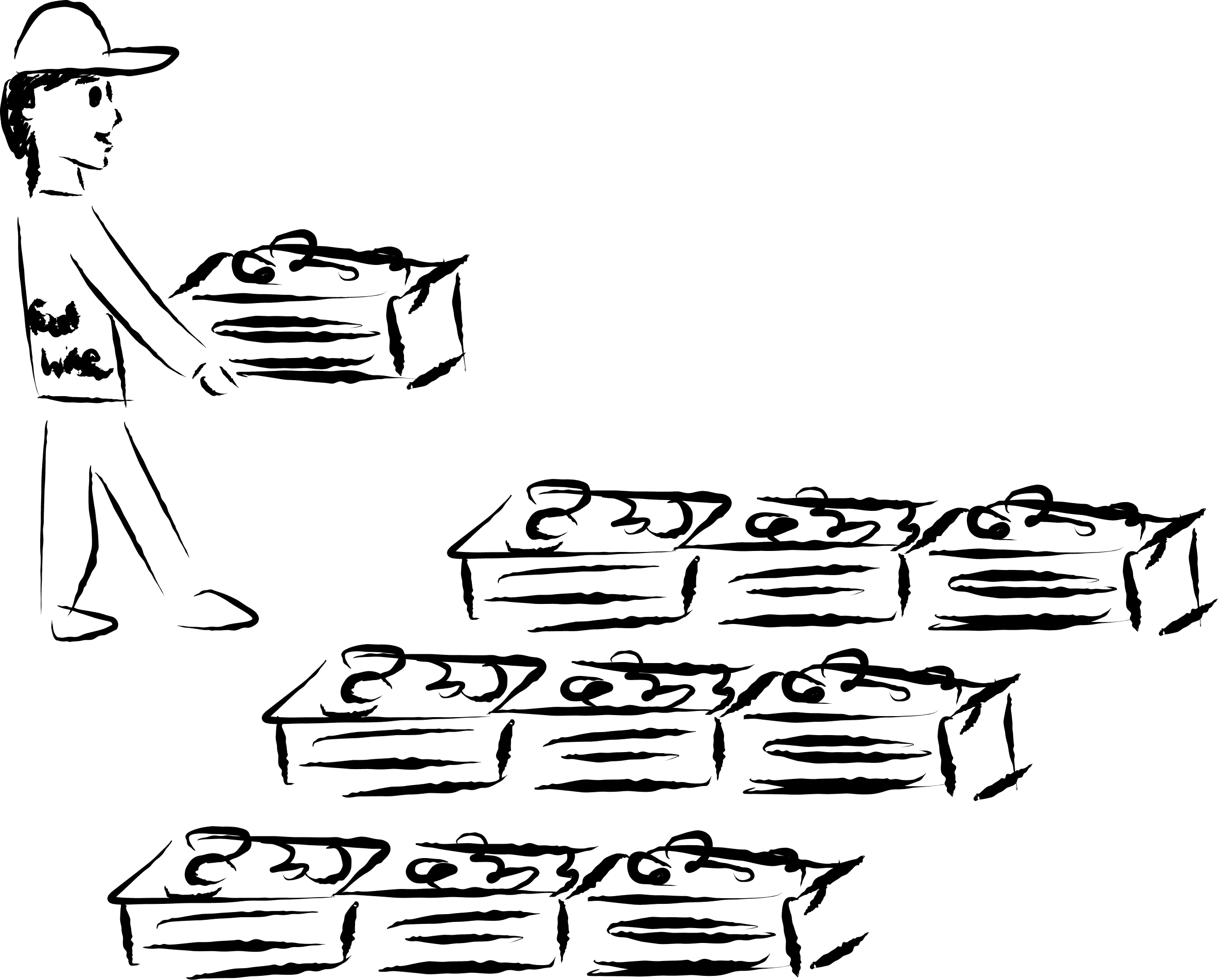
As chefs place orders, farmers can see what they need to pack, organized by either restaurant or category. This gives farmers flexibility for packing efficiently.
When items are packed, they can be marked complete, updating the status of those orders.

Chef — Ordering Process
Chef's browse the platform and place their orders with various farmers. They are notified each week ahead of the ordering deadline for Saturday's Ferry Plaza Farmer's Market.
Chef's Ordering Platform
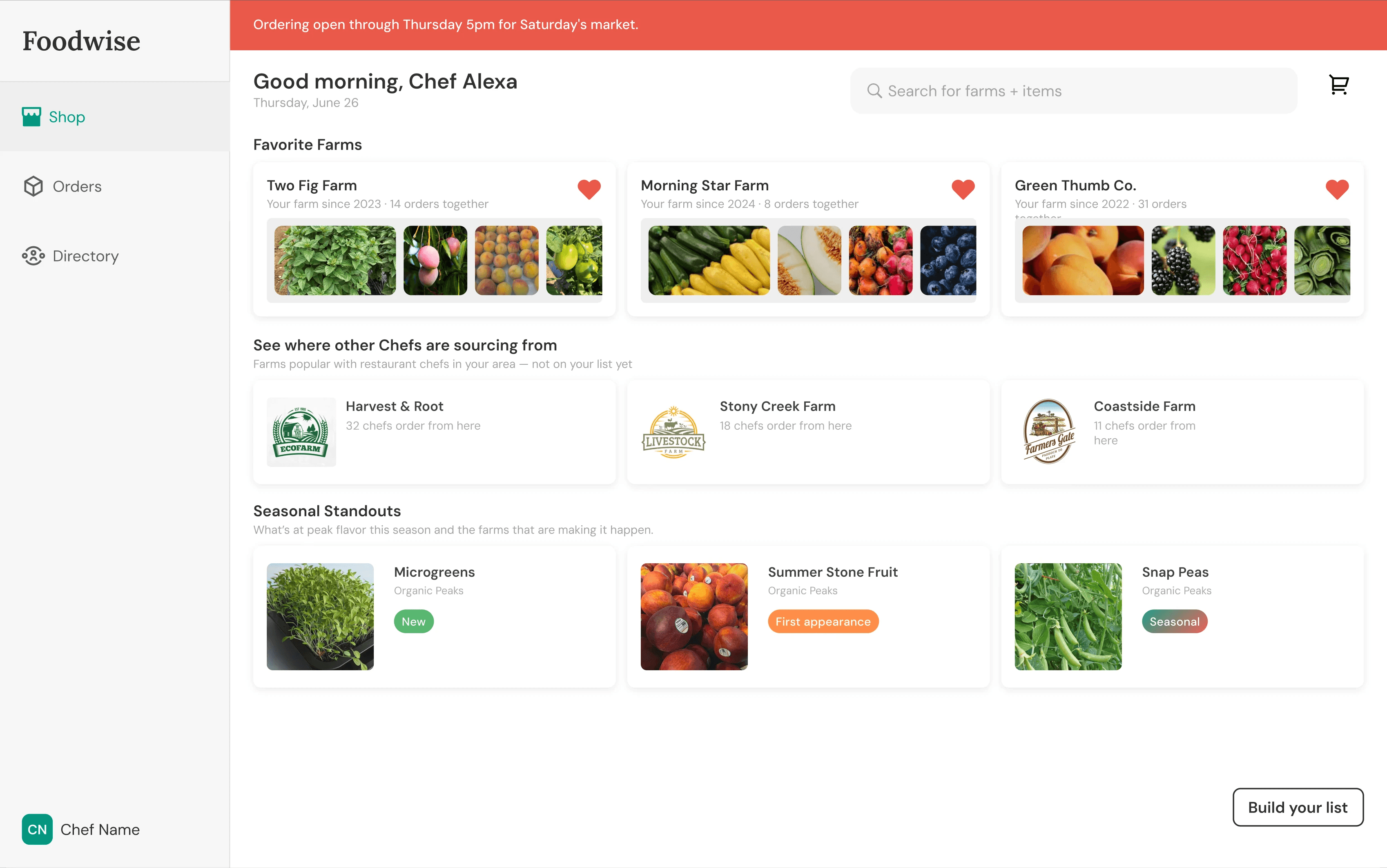
Chefs open their ordering platform and can quickly access favorite farms, see where other chefs are ordering from, and browse seasonal specialties across farms.
Chef interviews highlighted how much repeat ordering matters: chefs return to the same trusted farms week after week and want a fast way back to them. Favorite Farms gives chefs one-tap access to those relationships.

Shop by Farm
Chefs select a farm to see what's available, including farmer's highlights — seasonal varieties, specialties, and previously purchased items.
This surfaces the most relevant items for that chef, from that farm.

Build Your List
Rather than browsing farm by farm, chefs use "Build your list" to shop for menu ingredients more efficiently.
Then, chefs can select "Find farms for my list" to automatically identify farms with those items.
This method enables chefs to discover new local farms to source from and potentially build on-going relationships with.
Orders & Delivery Status
Chefs can view all their orders — recently placed, in progress, and completed — in one place.
Chef interviews highlighted reordering from past orders as one of the fastest ways to rebuild a week's list.
On delivery day, chefs can track order status in real time and message the driver directly if issues come up.

Physical Touchpoints for Diners

Certification Stickers
Living Plate stickers identify restaurants certified by the program to be sourcing at least 20% of their ingredients locally.


Dining Cards
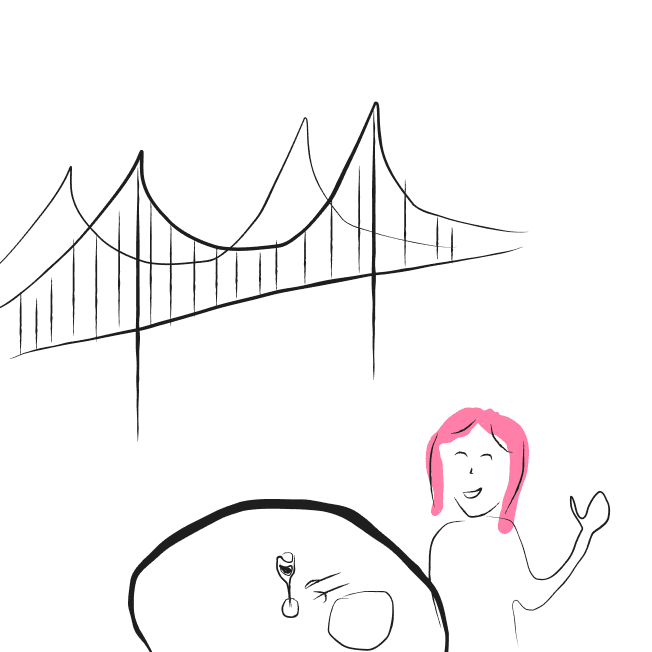
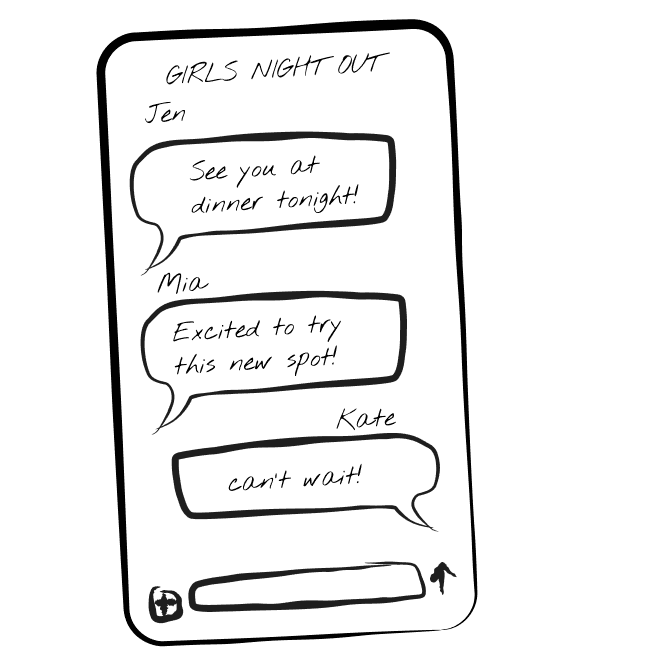
Given to diners with their bill, scannable dining cards show where their food came from, linking to the Living Plate homepage, which includes a directory of other certified restaurants.

Counter Cards
Counter cards spotlight a featured local, seasonal product of the month, along with the farm and dish it's used in.









Final Designs
We created a website where diners can explore certified restaurants and the farmers and chefs behind their meals.
Living Plate Website
Desktop Home
Scanning the dining card brings diners to the Living Plate website, where they can learn about local sourcing, discover other certified restaurants, and see the relationships between farmers and chefs behind their meal.


Mobile Home
The same experience, responsive for diners scanning the card on their phone at the table.
Restaurant Discovery
Diners can browse the full directory of Living Plate–certified restaurants, filter by cuisine or neighborhood, and open a restaurant's profile to see its specific sourcing story and the farms behind its menu.


Closing the Loop
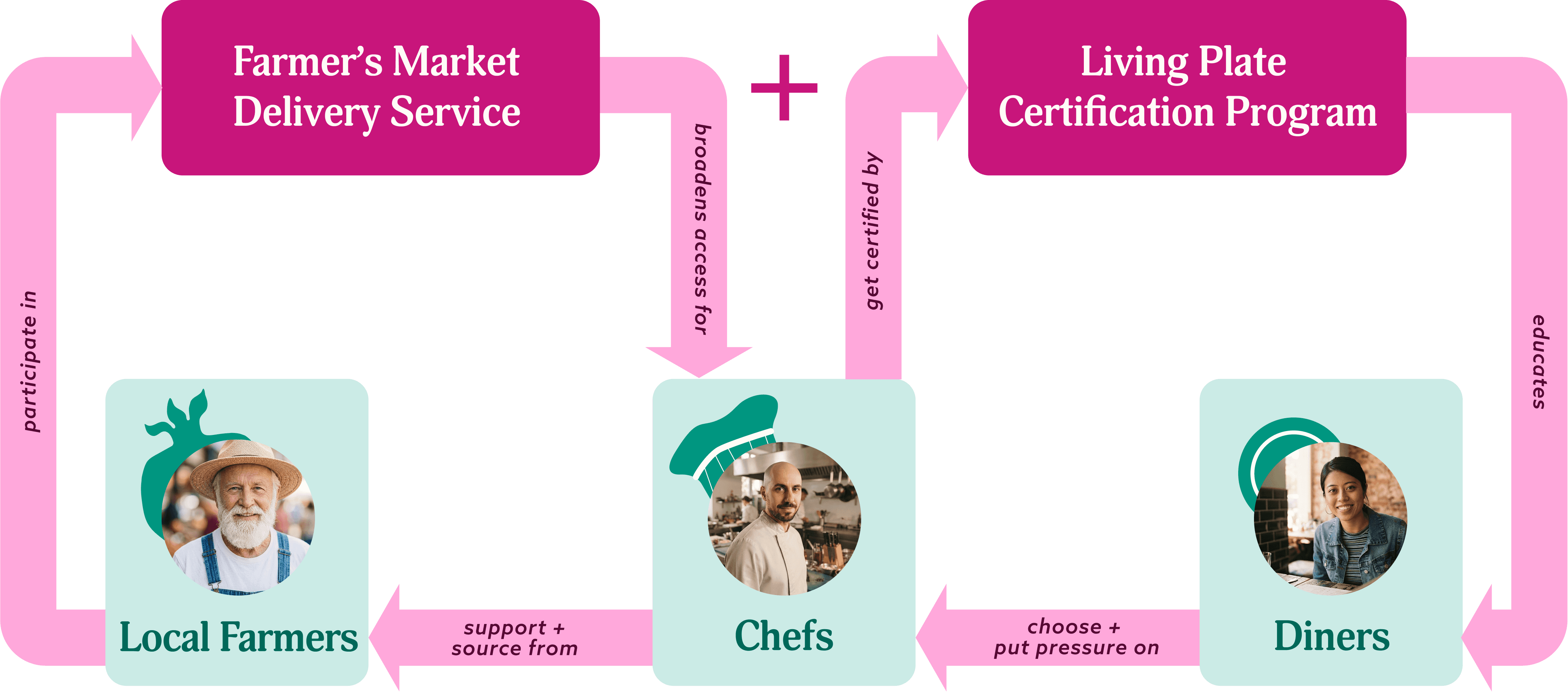
Together, the delivery service and certification program create a closed loop: farmers reach more chefs, chefs get recognized for sourcing well, and diners discover and choose restaurants that source locally — reinforcing demand at every step

Reflections
Working at this scope taught us how to prioritize. It wasn't just about what to build, but what story we were trying to tell, and who it was really for. Partnering with Foodwise as an advisor grounded the project in real constraints, like the market's operating days and the practical limits of a small organization's resources, which shaped what a realistic delivery system could actually look like. Feedback sessions with IDEO pushed the narrative and systems thinking further, helping us refine our diagram, sharpen the story, and identify where the system's logic, including how the loop closed, wasn't yet clear to an outside reader.
Above all, we wanted this project to have real impact. Rather than centering the individual consumer, we approached it as a system level challenge. Food systems are expansive, and this project aimed to work at the root of that system, connecting the real people who grow, cook, and eat the food.